
Retatrutide Facts You Should Know
TRIPLE HORMONE ACTION
Activates GLP-1, GIP and glucagon receptors to influence appetite regulation, glucose metabolism, fat metabolism and energy expenditure.
SUPPORTS METABOLIC FUNCTION
Research indicates potential benefits on metabolic pathways involved in body-weight regulation and energy balance.
INFLUENCES ENERGY BALANCE
May increase energy expenditure and fat oxidation in various preclinical and clinical models.
APPETITE REGULATION PATHWAYS
Acts on mechanisms that may help reduce hunger and food intake in research settings.
GLYCEMIC CONTROL PATHWAYS
Shown to have potential for improving glucose handling in clinical studies.
CARDIOVASCULAR MARKERS
Clinical research has evaluated effects on several cardiometabolic markers.
CLINICAL RESEARCH
Evaluated in multiple randomized, double-blind, placebo-controlled clinical trials.
MULTIPLE SYSTEMS APPROACH
Targets several physiological systems involved in metabolic regulation.
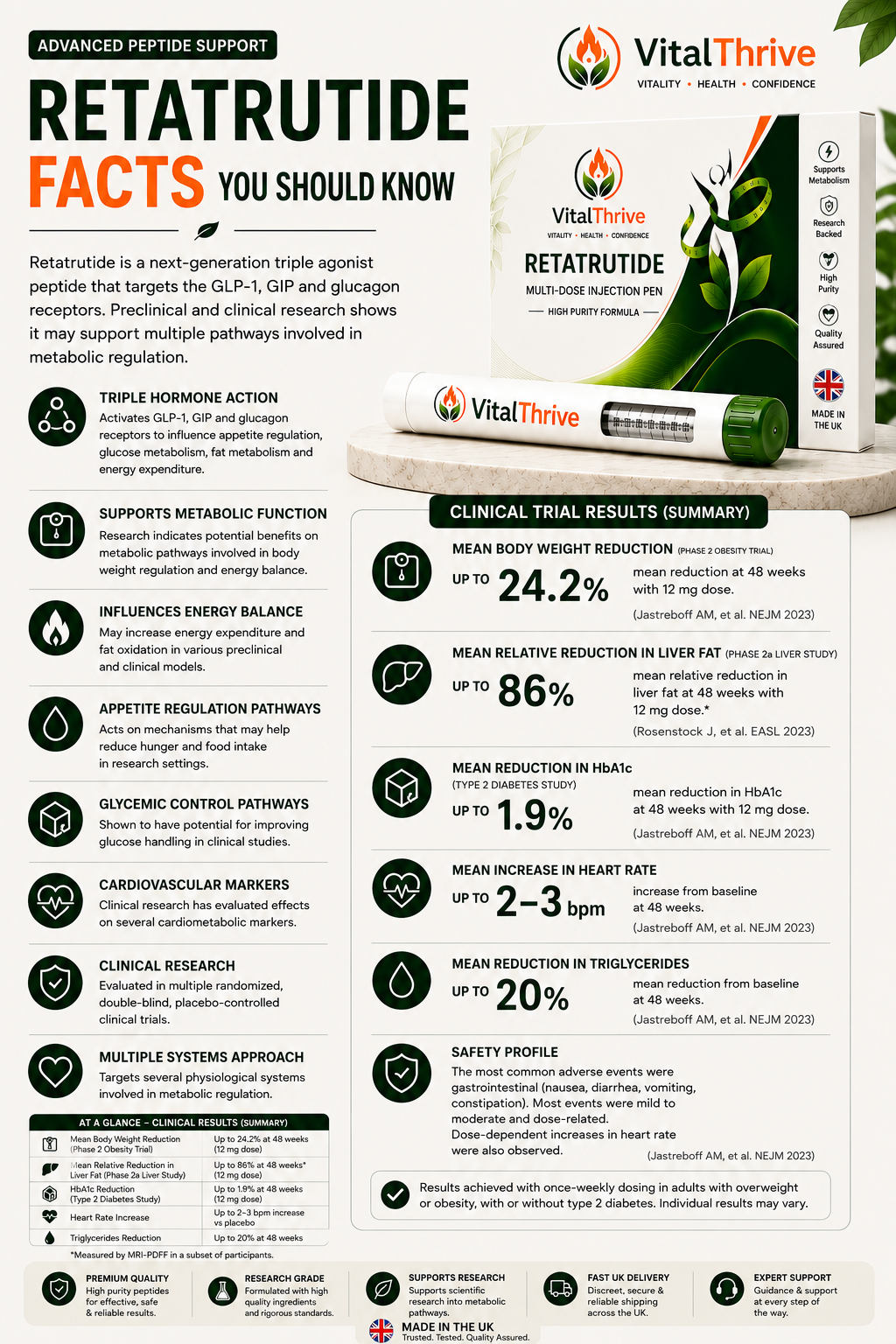
Clinical Trial Results — Summary
Mean Body Weight Reduction
Up to 24.2% mean reduction at 48 weeks with the 12 mg dose in the Phase 2 obesity trial.
Mean Relative Reduction in Liver Fat
Up to 86% mean relative reduction in liver fat at 48 weeks with the 12 mg dose in the Phase 2a liver study.*
Mean Reduction in HbA1c
Up to 1.9% mean reduction in HbA1c at 48 weeks with the 12 mg dose in participants with type 2 diabetes.
Mean Increase in Heart Rate
Approximately 2–3 bpm increase from baseline at 48 weeks.
Safety Profile
The most common adverse events were gastrointestinal, including nausea, diarrhoea, vomiting and constipation. Most events were mild to moderate and dose-related. Dose-dependent increases in heart rate were also observed.
*Liver fat was measured by MRI-PDFF in a subset of participants.