
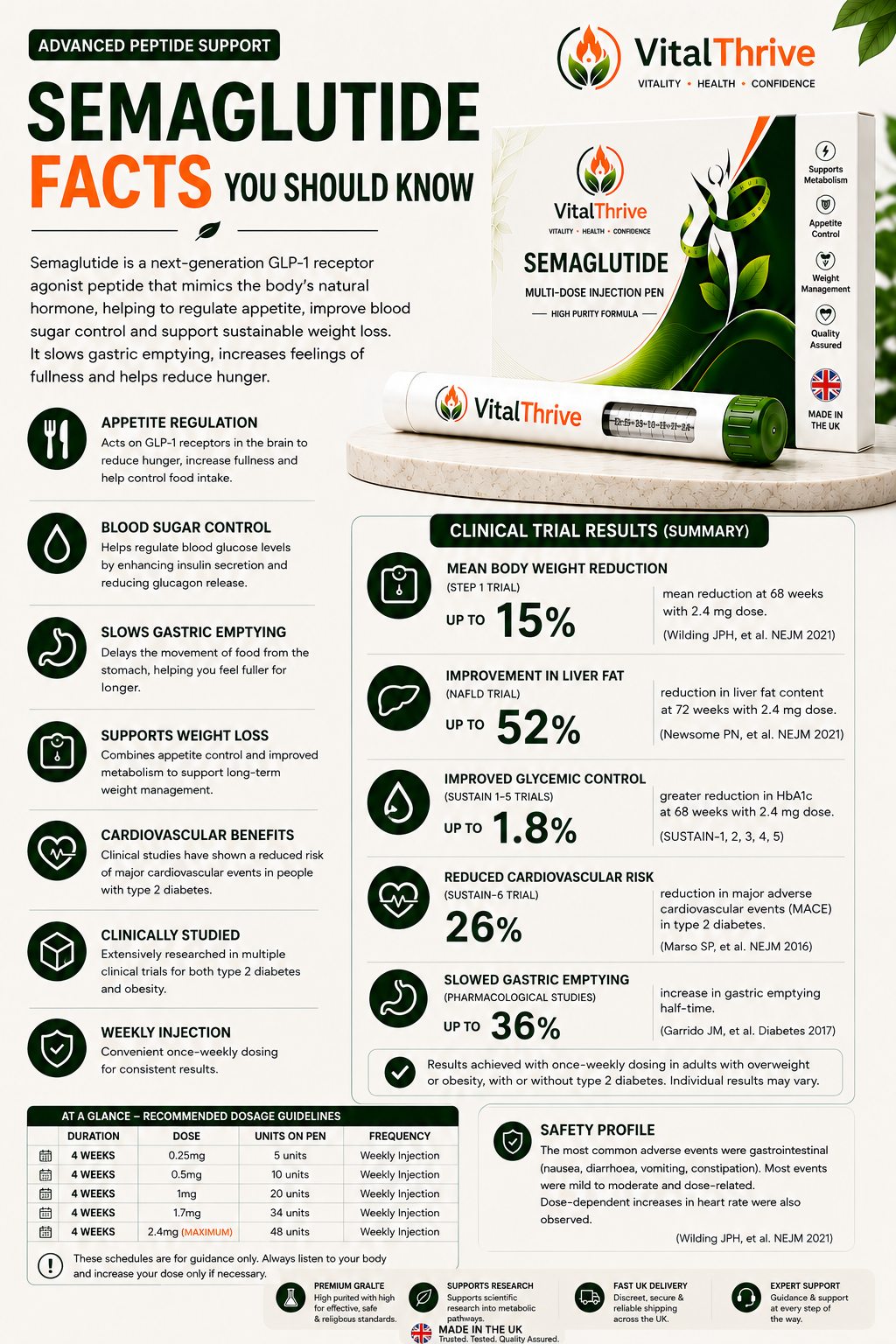
SEMAGLUTIDE — FACTS YOU SHOULD KNOW
Semaglutide is a GLP-1 receptor agonist that mimics the action of the naturally occurring hormone GLP-1. It has been extensively studied for its effects on appetite regulation, body weight, blood-glucose control and cardiovascular outcomes.
GLP-1 RECEPTOR AGONIST
Semaglutide activates GLP-1 receptors involved in appetite, glucose regulati.on and energy intake
APPETITE REGULATION
Clinical research shows that semaglutide can reduce appetite and energy intake, helping people feel fuller and reducing hunger.
SLOWS GASTRIC EMPTYING
Semaglutide can delay gastric emptying, particularly following treatment initiation, which contributes to its effects on satiety.
WEIGHT MANAGEMENT
In the STEP 1 trial, adults with overweight or obesity without diabetes receiving semaglutide 2.4 mg once weekly alongside lifestyle intervention experienced an average 14.9% reduction in body weight at 68 weeks, compared with 2.4% with placebo.
CARDIOMETABOLIC HEALTH
Weight reduction with semaglutide in STEP 1 was accompanied by improvements in several cardiometabolic risk factors, including waist circumference, blood pressure, HbA1c and lipid levels.
BLOOD-GLUCOSE CONTROL
Semaglutide has been extensively investigated in people with type 2 diabetes and can improve glycaemic control through its GLP-1 receptor activity.
LIVER RESEARCH
Semaglutide has also been investigated in people with fatty-liver disease and NASH. Clinical studies have demonstrated reductions in liver fat/steatosis, although results should not be interpreted as showing that semaglutide universally reverses liver fibrosis.
CARDIOVASCULAR RESEARCH
The large SELECT cardiovascular-outcomes trial studied 17,604 adults with overweight or obesity and established cardiovascular disease but without diabetes. Major cardiovascular events occurred in 6.5% of participants receiving semaglutide compared with 8.0% receiving placebo, corresponding to a 20% relative risk reduction.
CLINICALLY STUDIED
Semaglutide has been evaluated across extensive randomised clinical-trial programmes involving people with obesity, overweight and type 2 diabetes.